


Car Accidents
Personal Support For Every Client
We want you to feel like you are one of ours from beginning to the end of your case.Aggressively Fight For Our Clients
Due to our tenacious approach, we have secured more than $100 million in the past.No Recovery, No Fee
If we do not win your case, you don't have to pay- and every case consultation is 100% free.Injured in New York? Get Your Free Case Evaluation Today.
Call Gruenberg Kelly Della 24/7 or complete our online form. No fee unless we win. $100M+ recovered for Long Island injury victims.
If you or someone you love has been hurt because of someone else’s negligence, you’re probably dealing with a lot at once: medical bills piling up, time off work, pain that doesn’t go away, and a stack of questions you don’t know how to answer. You may be wondering whether you have a case, how the legal process works, and whether hiring a personal injury lawyer in New York is even worth it.
This guide is designed to answer those questions honestly. We’ll walk you through how New York personal injury law works, what damages you may be entitled to recover, how the claims process unfolds from start to finish, and what to look for when choosing an attorney. Whether your injury happened on the road, at work, on someone else’s property, or in a hospital, the information here applies to you.
Gruenberg Kelly Della is a Long Island personal injury law firm. We handle only personal injury cases. We handle only personal injury cases, not wills, divorces, or business disputes, and we’ve recovered more than $100 million for injured clients and their families across Nassau County, Suffolk County, and throughout New York. This guide reflects what we’ve learned representing thousands of real people through situations like yours.

What is personal injury law in New York?
Personal injury law gives injured people the right to seek financial compensation when their injuries were caused by someone else’s negligence, recklessness, or intentional actions. In New York, this area of law covers an enormous range of situations: car accidents, slip and falls, medical malpractice, construction accidents, wrongful death, dog bites, and more.
The legal foundation is negligence. To win a personal injury claim in New York, you generally need to prove four things:
- Duty: The person or entity who hurt you had a legal obligation to act with reasonable care toward you.
- Breach: They failed to meet that obligation by driving recklessly, failing to maintain safe property, or providing substandard medical care, for example.
- Causation: Their breach directly caused your injury.
- Damages: You suffered real, measurable harm as a result.
New York follows a rule called pure comparative negligence. This means that even if you were partly at fault for your own injury, you can still recover compensation; it’s simply reduced by your percentage of fault. If a jury finds you 20% at fault and awards $100,000 in damages, you’d receive $80,000. Many states cut off recovery entirely if you’re found more than 50% at fault; New York does not.
This is an important distinction, and it’s one reason why you shouldn’t assume you can’t make a claim just because you may have made a mistake. Let an attorney evaluate what actually happened before concluding.
Types of personal injury cases we handle
Personal injury is a broad practice area. Gruenberg Kelly Della handles the following types of cases for Long Island clients:
Vehicle accidents are the most common type of personal injury case in New York. New York is a no-fault insurance state, which means that after an accident, your own auto insurance pays your medical bills and lost wages up to the policy limit, regardless of who caused the crash. However, when injuries meet New York’s “serious injury” threshold (significant disfigurement, fracture, permanent limitation of use, or substantial impairment), you have the right to step outside no-fault and sue the at-fault driver directly. This is where significant compensation for pain and suffering, long-term disability, and full lost wages becomes available.
Slip and Fall / Premises Liability
Property owners in New York have a legal duty to maintain their premises in a reasonably safe condition. When they fail to address a dangerous condition they knew about (or should have known about), and someone is hurt as a result, that’s a premises liability claim. Common examples include wet floors in stores, broken sidewalks, inadequate lighting in parking lots, and poorly maintained staircases. The key issue in these cases is notice: did the property owner know about the hazard, and did they have a reasonable time to fix it?
When a doctor, hospital, or healthcare provider deviates from the accepted standard of care, and a patient is harmed as a result, that’s medical malpractice. These cases are among the most complex in personal injury law. They require expert medical witnesses, a thorough review of medical records, and lawyers who understand both the legal and clinical dimensions of what went wrong. New York’s statute of limitations for medical malpractice claims is two and a half years from the date of the malpractice or from the end of continuous treatment, which is shorter than the general personal injury deadline.
New York has some of the strongest worker-protection laws in the country for construction sites. Labor Law 240, known as the Scaffold Law, imposes absolute liability on property owners and general contractors when a worker is injured in a fall from height or by a falling object, regardless of the worker’s own conduct. Labor Law 241 imposes similar protections related to excavation and demolition. These laws can allow injured construction workers to pursue third-party lawsuits in addition to workers’ compensation claims, often resulting in significantly higher recovery.
When someone is killed due to another party’s negligence, the deceased person’s family may bring a wrongful death claim. In New York, the personal representative of the estate files the lawsuit on behalf of the surviving family members. Recoverable damages include funeral and burial expenses, medical bills incurred before death, lost financial support the deceased would have provided, and loss of parental guidance for surviving children. These cases require sensitivity, skill, and a firm willing to take on well-funded insurance companies and corporations.
Our practice also covers dog bites and animal attacks, nursing home abuse and neglect, defective product injuries, pedestrian and bicycle accidents, rideshare accidents (Uber, Lyft), and traumatic brain injuries. If your injury doesn’t fit a neat category, call us. The best way to know whether you have a case is to talk to an attorney.
What damages can you recover in a new york personal injury case?
New York law allows injured plaintiffs to recover two categories of damages: economic and non-economic. In cases involving egregious conduct, punitive damages may also be available, though they are rare.
Economic Damages
Economic damages compensate for specific, measurable financial losses:
- Medical expenses: Emergency care, hospitalization, surgery, rehabilitation, physical therapy, prescription medications, medical equipment, and any future medical care related to the injury.
- Lost wages: Income you lost while recovering from your injury, including time off for doctors’ appointments, surgery, and recuperation.
- Loss of earning capacity: If your injury prevents you from returning to your prior occupation or limits your ability to work in the future, you can recover for the difference in lifetime earning potential.
- Out-of-pocket expenses: Transportation to medical appointments, home modifications for disability, in-home care, and other costs directly caused by the injury.
Non-Economic Damages
Non-economic damages compensate for losses that don’t come with a receipt but are very real:
- Pain and suffering: Compensation for the physical pain caused by the injury and ongoing discomfort from treatment and recovery.
- Emotional distress: Anxiety, depression, PTSD, and other psychological effects of a serious injury.
- Loss of enjoyment of life: Inability to participate in hobbies, activities, and aspects of daily life you previously enjoyed.
- Loss of consortium: Compensation for a spouse or family member who has lost companionship, support, or the marital relationship due to the injury.

How Much is my case worth?
No two personal injury cases are exactly alike. Case value depends on the severity of your injuries, the strength of the evidence, the at-fault party’s insurance coverage, and many other factors. Gruenberg Kelly Della offers free case evaluations where we review your specific situation and give you an honest assessment. Our team has evaluated thousands of cases and recovered $100M+ for New York injury victims.
New York’s Statute of Limitations: How Long Do You Have?
A statute of limitations is the legal deadline to file a lawsuit. If you miss it, your case is gone, regardless of how strong it is. In New York, the deadlines vary by case type:
Case Type | Filing Deadline |
|---|---|
General personal injury | 3 years from the date of injury |
Medical malpractice | 2.5 years from malpractice or the end of continuous treatment |
Wrongful death | 2 years from the date of death |
Claims against a government entity | Notice of Claim required within 90 days; lawsuit within 1 year and 90 days |
Injuries to minors | Tolled (paused) until the child turns 18 in most cases |
These deadlines may seem far away when you’re in the middle of recovering from an injury, but time moves faster than you expect. Evidence disappears. Witnesses’ memories fade. Insurance companies count on injured people waiting too long to act.
Additionally, gathering medical records, building a case, and negotiating with insurance companies takes time. Most personal injury attorneys, including Gruenberg Kelly Della, recommend reaching out as soon as possible after an injury so that nothing is lost and no deadlines are missed.
Important: If your injury involved a government entity such as the City of New York, the MTA, or a county highway department, you must file a formal Notice of Claim within 90 days of the incident. Failing to do so can permanently bar your right to sue. Contact an attorney immediately if a government entity may be involved in your case.
The Personal Injury Claims Process in New York
Understanding how the process works from beginning to end can reduce anxiety and help you make better decisions. Here is a realistic picture of what happens after a personal injury in New York.
Accordion Content
Your health comes first. Go to the emergency room, urgent care, or your primary care doctor as soon as possible after an injury, even if you think you feel okay. Some injuries, including whiplash, concussions, and internal injuries, don’t show full symptoms right away. Prompt medical attention also creates a contemporaneous record linking your injury to the incident, which is critical for your legal case.
If you’re physically able, document the scene. Take photographs of your injuries, the location where the incident occurred, any hazardous conditions, and any property damage. Get the names and contact information of witnesses. If police were called, get the report number. Save all medical records, bills, and correspondence with insurance companies.
After an injury, the at-fault party’s insurance company may contact you quickly and ask for a recorded statement. Do not give one. Insurance adjusters are trained to ask questions in ways that can minimize your claim or shift blame onto you. You are not legally required to give a recorded statement to another party’s insurer. Speak with an attorney first.
Most personal injury attorneys, including Gruenberg Kelly Della, offer free consultations. Bring whatever documentation you have. An experienced attorney will evaluate your case, explain your options, and tell you honestly whether you have a viable claim and what it may be worth. This consultation costs you nothing and obligates you to nothing.
If you retain an attorney, they will begin building your case. This includes gathering medical records, obtaining accident reports, interviewing witnesses, preserving surveillance footage, consulting experts, and documenting the full scope of your damages. For complex cases involving medical malpractice or construction accidents, this phase involves specialists in those fields.
Once your injuries have reached maximum medical improvement (the point at which your condition has stabilized), your attorney will send a demand letter to the at-fault party’s insurance company outlining your damages and the compensation you are seeking. Negotiation follows. The majority of personal injury cases are resolved through settlement without going to trial, but only when both sides know the other side is prepared for court.
If the insurance company refuses to offer fair compensation, your attorney files a lawsuit. This doesn’t mean your case will go to trial; most lawsuits settle during the discovery process or at mediation. But filing puts the insurance company on notice that you are serious, and it often results in a significantly improved offer. Gruenberg Kelly Della is a trial firm. We go to court when that’s what it takes to get our clients what they deserve.
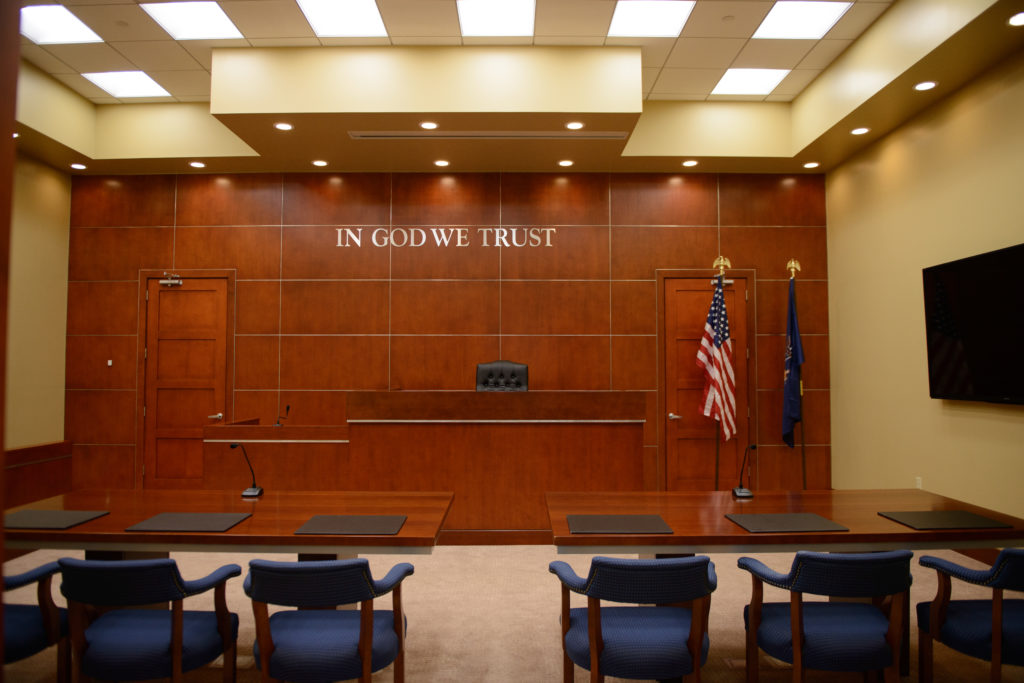
If a fair settlement cannot be reached, your case goes before a judge or jury. Trial preparation is intensive and requires an attorney with courtroom experience. The strength of your case at trial (the quality of your evidence, expert witnesses, and legal arguments) typically determines the outcome. This is why choosing a firm with genuine trial experience matters enormously.
Settlement Vs. Trial: What You Need To Know
One of the most common questions injured clients ask is whether to settle or go to trial. The honest answer is: it depends on the facts of your case, the insurance company’s behavior, and your personal circumstances.
Settlement has real advantages. It provides a guaranteed outcome, avoids the uncertainty and stress of trial, and is usually faster. Most personal injury cases in New York settle.
Trial becomes necessary when an insurance company refuses to offer fair value. This happens more often than it should. Insurance companies are for-profit businesses, and their claims adjusters are incentivized to pay as little as possible. When a firm like Gruenberg Kelly Della is involved, a firm with a documented history of winning at trial, insurance companies take claims more seriously and tend to make better offers. Our trial reputation works for our clients from day one, not just if a case goes to verdict.
We will never pressure you to accept a settlement you’re not satisfied with. We’ll explain the offer, the risks of trial, the likely range of outcomes, and give you our honest recommendation. The decision is always yours.
Dealing with Insurance companies: What they don't want you to know
Insurance companies are not on your side. This is not cynicism; it is the fundamental reality of how the insurance industry operates. Their adjusters are skilled professionals whose job is to minimize what they pay out on every claim.
Here are the tactics they use most often:
- Early contact and low offers: Adjusters often call within 24-48 hours of an accident, while victims are still in shock or in the hospital, with a quick settlement offer. These early offers are almost always far below the true value of the claim.
- Recorded statements: They ask you to “just tell us what happened” on the record. What you say can and will be used against you to deny or minimize your claim.
- Delays: Dragging out the claims process in hopes that financial pressure will force you to accept less than you deserve.
- Independent medical exams: They send you to their own doctor (not yours), whose report often concludes your injuries are less severe than they are.
- Surveillance: For larger claims, insurance companies may hire investigators to photograph or video you in daily activities to challenge your claimed limitations.
- Disputing causation: Arguing that your injuries were pre-existing or caused by something other than the insured’s negligence.
Having an attorney levels the playing field. When Gruenberg Kelly Della represents you, insurance companies know they’re dealing with a firm that has the resources and willingness to litigate. That knowledge changes their behavior.
How to Choose A personal injury lawyer in long island
Not all personal injury lawyers are equal. Long Island has many firms, some excellent and some less so. Here is what to look for when making this important decision.
Lorem ipsum dolor sit amet, consectetur adipiscing elit. Ut elit tellus, luctus nec ullamcorper mattis, pulvinar dapibus leo.
Choose a firm that focuses on personal injury, not one that handles personal injury alongside divorces, real estate closings, and business contracts. Specialization means deeper knowledge of the law, more experience with the specific issues that arise in your type of case, and better relationships with the expert witnesses and medical specialists your case may require.
Many firms advertise personal injury but rarely or never go to trial. They build their business model around quick settlements, which benefits them (faster turnover) but often shortchanges clients. Ask whether the attorneys have taken cases to verdict. Gruenberg Kelly Della’s attorneys have tried cases in Nassau County Supreme Court, Suffolk County Supreme Court, and across New York State.
Complex cases involving medical malpractice, construction accidents, and catastrophic injury require significant financial investment. Hiring expert witnesses, retaining accident reconstruction specialists, and funding years of litigation costs money. Make sure the firm you choose has the resources to take your case all the way if necessary.
Gruenberg Kelly Della’s approach is “Personal Support for Every Client.” That means your calls are returned, you receive regular updates, and you always know where your case stands. Ask any firm you’re considering how they communicate with clients. Be specific: Who will you actually speak with? How often will you hear from them?
Look at verdicts and settlements, but interpret them carefully. Any firm can cherry-pick a big number. What matters is consistency across many cases and in situations similar to yours. Our $100M+ in recovered compensation reflects more than a single landmark verdict; it represents thousands of real clients whose lives were changed by what we did for them.
Be cautious of firms that: guarantee specific results (no attorney can ethically do this), pressure you to sign before you’re ready, are difficult to reach after you hire them, have high associate turnover, or rely heavily on TV and billboard advertising with little courtroom experience behind the image.
What to expect working with Gruenberg Kelly della
From the moment you contact us, here is how we work:
- Free consultation: We review your case at no cost and no obligation. You will speak with an attorney, not a paralegal or intake coordinator, who can give you a real assessment of your situation.
- No upfront fees: We work on a contingency fee basis. You pay nothing unless we win. Our fee is a percentage of the recovery, and you never write us a check out of your own pocket.
- Dedicated case management: You’ll have a direct contact at the firm and regular communication throughout your case. We don’t believe in leaving clients in the dark.
- Full investigation: We build cases thoroughly, not quickly. Evidence collection, expert consultation, and careful legal strategy from day one.
- Aggressive representation: We negotiate hard and litigate harder when necessary. Insurance companies know our reputation. That reputation benefits you.
- Local presence: We are a Long Island firm. We know the local courts, judges, and opposing attorneys. We are part of this community.
Personal injury is never just a legal matter. It affects your health, your finances, your family, and your sense of security. We take that seriously. Our goal is to get you the maximum compensation available under the law and to handle the legal complexity so you can focus on recovery.
The no-fee guarantee: How contingency fees work
Concern about legal fees prevents many injured people from seeking the representation they deserve. Contingency fees eliminate that barrier.
Here’s how it works: Gruenberg Kelly Della does not charge hourly fees or require a retainer. We advance all costs of litigation (filing fees, expert witness fees, deposition costs, investigation expenses), and we recover those costs only if we win your case. Our attorney’s fee is a percentage of the final recovery, agreed upon before we begin.
This means:
- If we don’t win, you owe us nothing.
- If we do win, our fee comes out of the recovery, not your pocket.
- You always know exactly what the fee arrangement is before you sign anything.
The contingency fee model ensures that our interests and your interests are perfectly aligned. We only get paid when you get paid, and the more we recover for you, the better the outcome for everyone. It also ensures that injured people of any financial means have access to experienced legal representation.
Frequently Asked Questions
There is no universal answer. Straightforward cases with clear liability and a cooperative insurance company can resolve in months. Complex cases involving serious injuries, disputed liability, medical malpractice, or wrongful death may take one to three years or longer if they go to trial. Your attorney will give you a realistic timeline based on the specifics of your situation.
Under New York’s pure comparative negligence rule, you can still recover even if you were partially at fault. Your compensation is reduced by your percentage of fault. If you were 30% responsible for an accident and the total damages are $200,000, you would recover $140,000. Never assume your own partial fault eliminates your claim.
Most cases settle before trial. However, the willingness and ability to go to court is what gives your attorney negotiating leverage. We prepare every case for trial from day one, which strengthens our position at every step, including during settlement negotiations.
Uninsured motorist coverage on your own auto policy may cover your damages if you are hit by an uninsured driver. Underinsured motorist coverage applies when the at-fault driver’s policy limits are insufficient. We help clients navigate both situations.
Yes. We charge nothing upfront and take no fee unless we recover compensation for you. There is no financial risk to consulting with us or retaining us.
Possibly not, but the clock is running. In most New York personal injury cases, you have three years from the date of injury. For medical malpractice, two and a half years. For wrongful death, two years. For government claims, you may have already missed the 90-day notice window. Contact us immediately so we can assess your situation before any deadlines pass.
Serving nassau county, suffolk county, & All of Long island
Gruenberg Kelly Della serves personal injury clients throughout Long Island. Our attorneys are familiar with the courts, procedures, and local legal landscape in:
- Nassau County, including Hempstead, Mineola, Garden City, Rockville Centre, Valley Stream, and surrounding communities
- Suffolk County, including Islip, Brookhaven, Babylon, Huntington, Smithtown, Southampton, and East Hampton
- All five boroughs of New York City, when cases arise there for Long Island residents
We handle cases involving accidents on the Long Island Expressway, the Southern State Parkway, Sunrise Highway, Jericho Turnpike, and local roads throughout the Island. We are familiar with Nassau County Supreme Court, Suffolk County Supreme Court, and the district courts that hear smaller matters across Long Island.
If your injury happened anywhere on Long Island or in the greater New York area, we want to hear from you.
Ready to Talk to a Personal Injury Lawyer? There Is No Cost and No Obligation.
Call Gruenberg Kelly Della today or submit a free case evaluation online. Available 24 hours a day, 7 days a week. No fee unless we win. Serving Long Island, Nassau County, Suffolk County, and all of New York.
Prior results do not guarantee a similar outcome. All case results depend on the specific facts and legal circumstances of each matter. This article is provided for informational purposes only and does not constitute legal advice. Reading this content does not create an attorney-client relationship with Gruenberg Kelly Della.
Contact Us